



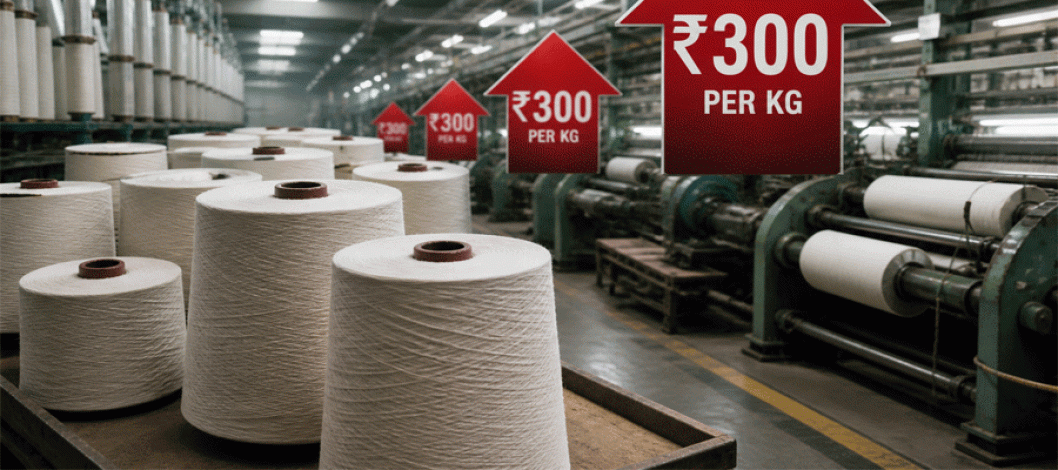
File photo
Cotton prices have increased to a four-year high of Rs 300 per kg, accelerated by the higher demand from China and Bangladesh, leading to higher fabric costs across the textile value chain and tightening supply in the market.
Fabric prices have increased by Rs 10 to Rs 25 per metre over the half month, higher textile processing charges and shutdown of several powerloom units have further tightened supply.
“The current season’s inventory has largely reached stores or is in the pipeline, and festive season sampling is still underway with prices yet to be finalised. This gives manufacturers and brands some room to recalibrate pricing and the impact on margins may not be as severe. We expect prices to rise by about 5%-8%,” said Rahul Mehta, chief mentor at Clothing Manufacturers Association Of India (CMAI).
He added that on the export front, margins will certainly be hit as contracts are already locked in and there is little scope to pass on the increased costs at this stage.
Trade bodies noted that the rise in yarn prices have affected fabric manufacturers, processors, retailers and the increase is now visible in the retail market as well.
The industry has expressed concerns over cotton availability and pricing, urging the Centre to remove the 11% import duty on cotton to ease supply constraints and stabilise domestic prices.
A detailed representation was also submitted by Powerloom Development and Export Promotion Council (PDEXCIL) to the central govt, seeking immediate intervention.
Cotton textiles make up nearly 80% of India’s textile exports, with shipments to Middle East markets exceeding US $3 billion annually. Domestic cotton prices are currently higher than benchmarks, while competitors such as Bangladesh and Vietnam continue to take advantage from duty-free cotton imports.
Amid acute yarn shortages, several powerloom units have already shut down despite having orders in hand. The industry estimated a shortage of 50 lakh bales this season, which could lead to production cuts, export losses of US $4 billion and major job losses.
You can learn about South Asia's
largest exhibition on this topic through this link: https://nonwovenexpo.com/
Source: Online/NAN






Comment Now