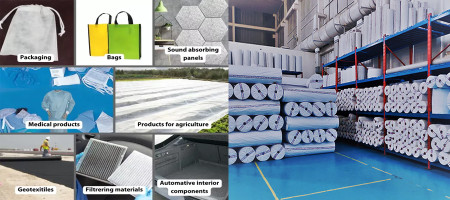



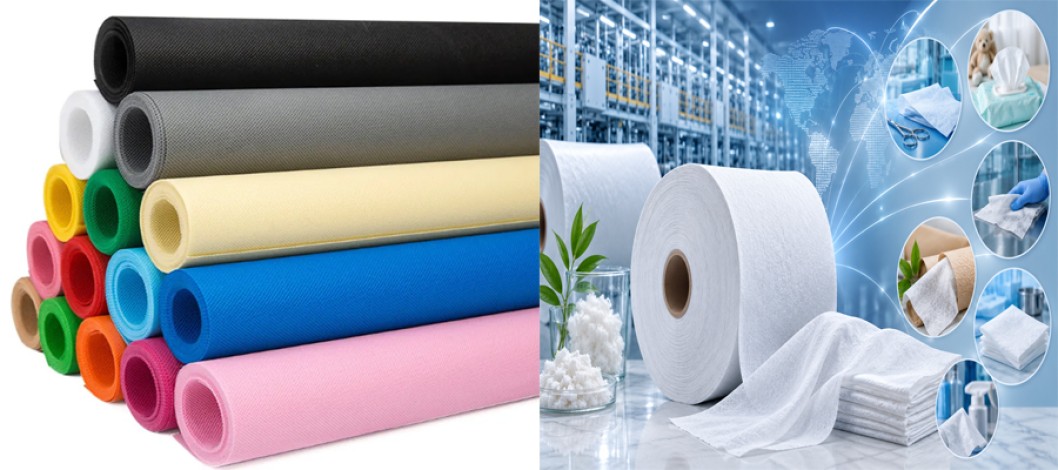
The global nonwoven products/fabrics market is expected to expand strongly between 2025 and 2035, driven by hygiene and medical products, filtration, construction and geotextiles, automotive applications, agriculture, packaging, and industrial uses.
Because market-research firms use different definitions of “nonwoven products” versus “nonwoven fabrics,” their forecasts vary considerably. Recent estimates put the 2025 global market roughly in the US$47–63 billion range, with 2035 estimates ranging from about US$77 billion to US$114 billion.
Market size outlook

FMI forecasts the overall nonwoven fabrics market from $47.2 billion in 2025 to $76.9 billion in 2035, while its PP-nonwovens forecast is $33 billion to $58 billion.
A September 2026 Emergen Research forecast specifically covering nonwoven products puts the market at $48.5 billion in 2025 and $93.65 billion in 2035, with a 6.8% CAGR from 2026–2035.
Another major forecast from MarketsandMarkets estimates $54.7 billion in 2025 and $72.2 billion in 2030, representing a 5.7% CAGR.
This remains one of the largest demand centers:
Baby diapers
Feminine hygiene products
Adult incontinence products
Wet wipes and dry wipes
Personal-care products
Disposable nonwovens represented 59.8% of the global market in 2023 in Grand View Research's analysis.
Demand is supported by:
Surgical gowns
Masks
Drapes
Medical wipes
Sterilization materials
Wound-care products
Disposable healthcare products
Healthcare is particularly important because nonwovens combine low weight, filtration, fluid management and cost efficiency.
Durable nonwovens are increasingly used in:
Road construction
Drainage
Soil stabilization
Roofing
Building membranes
Insulation
Erosion control
Grand View Research identifies construction, automotive and geotextiles collectively as major durable applications.
This is an important long-term opportunity covering:
Air filtration
HVAC filters
Industrial filtration
Water/liquid filtration
Automotive filtration
Clean-room applications
Advanced meltblown, spunbond, wetlaid and composite structures are particularly relevant.
Nonwovens are used for:
Interior trim
Headliners
Carpets
Acoustic insulation
Engine filtration
Battery-related applications
Lightweight composite components
The push toward vehicle weight reduction and improved acoustic/thermal performance supports demand.
Applications include:
Crop covers
Plant protection
Weed-control fabrics
Soil covers
Nursery materials
Horticultural textiles
This is one of the faster-growing niche areas. FMI estimates the nonwoven packaging market at $3.3 billion in 2025, reaching $7.4 billion by 2035, equivalent to an 8.6% CAGR.
The industry is broadly divided into:
Spunbond / spunlaid
Hygiene
Medical
Agriculture
Packaging
Geotextiles
Meltblown
Filtration
Medical
High-performance technical applications
Needle-punched
Geotextiles
Automotive
Construction
Industrial materials
Hydroentangled / spunlace
Wipes
Medical
Personal care
Cleaning products
Airlaid
Absorbent products
Hygiene
Medical
Industrial applications
Wetlaid
Filtration
Battery materials
Specialty industrial applications
Spunlaid was the leading technology in Grand View Research's 2023 market analysis, with 48.4% of market volume.
Polypropylene (PP) remains particularly important. Grand View Research reported PP at 45.3% of the market in 2023, while FMI estimates PP at 28.5% of the 2025 nonwoven fabrics market under its methodology. The different percentages illustrate why market definitions and methodologies should be checked before using figures commercially
Other important materials include:
Polyester/PET
Viscose/rayon
Wood pulp
Polyethylene
Bicomponent fibers
Recycled polymers
Bio-based fibers
Asia-Pacific is central to the industry's growth. Grand View Research reported that Asia-Pacific accounted for 43.1% of global nonwoven fabric demand in 2023, with China and India important growth markets.
The region benefits from:
Large manufacturing capacity
Growing hygiene-product consumption
Healthcare expansion
Infrastructure investment
Automotive production
Export-oriented manufacturing
Increasing demand for technical textiles
China is expected to remain a major global market, while India is identified as a rapidly expanding market.
The market is moving beyond conventional disposable nonwovens toward higher-value technical nonwovens. The strongest opportunities are likely to involve:
Hygiene → Medical → Filtration → Geotextiles → Automotive → Sustainable packaging → Advanced industrial materials
At the same time, manufacturers face challenges from volatile PP/PET prices, energy costs, sustainability requirements, recycling, plastic regulations and the need for higher-performance materials. Grand View Research specifically identifies raw-material price volatility as a continuing challenge.
For 2025–2035, nonwovens should be viewed not simply as a textile market but as a multisector technical-materials industry. Hygiene and medical applications provide a large established base, while filtration, geotextiles, automotive, agriculture and sustainable packaging create additional growth channels.
For an industry article or market report, I would use US$47.2 billion → US$76.9 billion (2025–2035) as a clearly sourced baseline, while explicitly noting that other research firms produce higher forecasts because their definitions and market coverage differ.
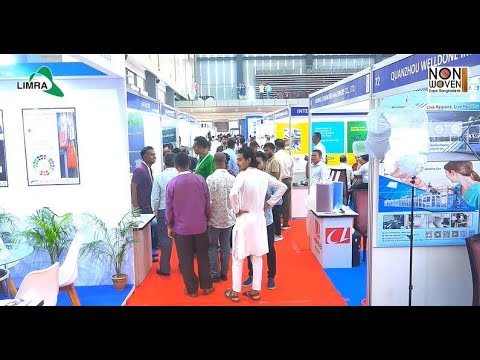
You can learn about South Asia's
largest exhibition on this topic through this link: https://nonwovenexpo.com/
-SZK





Comment Now